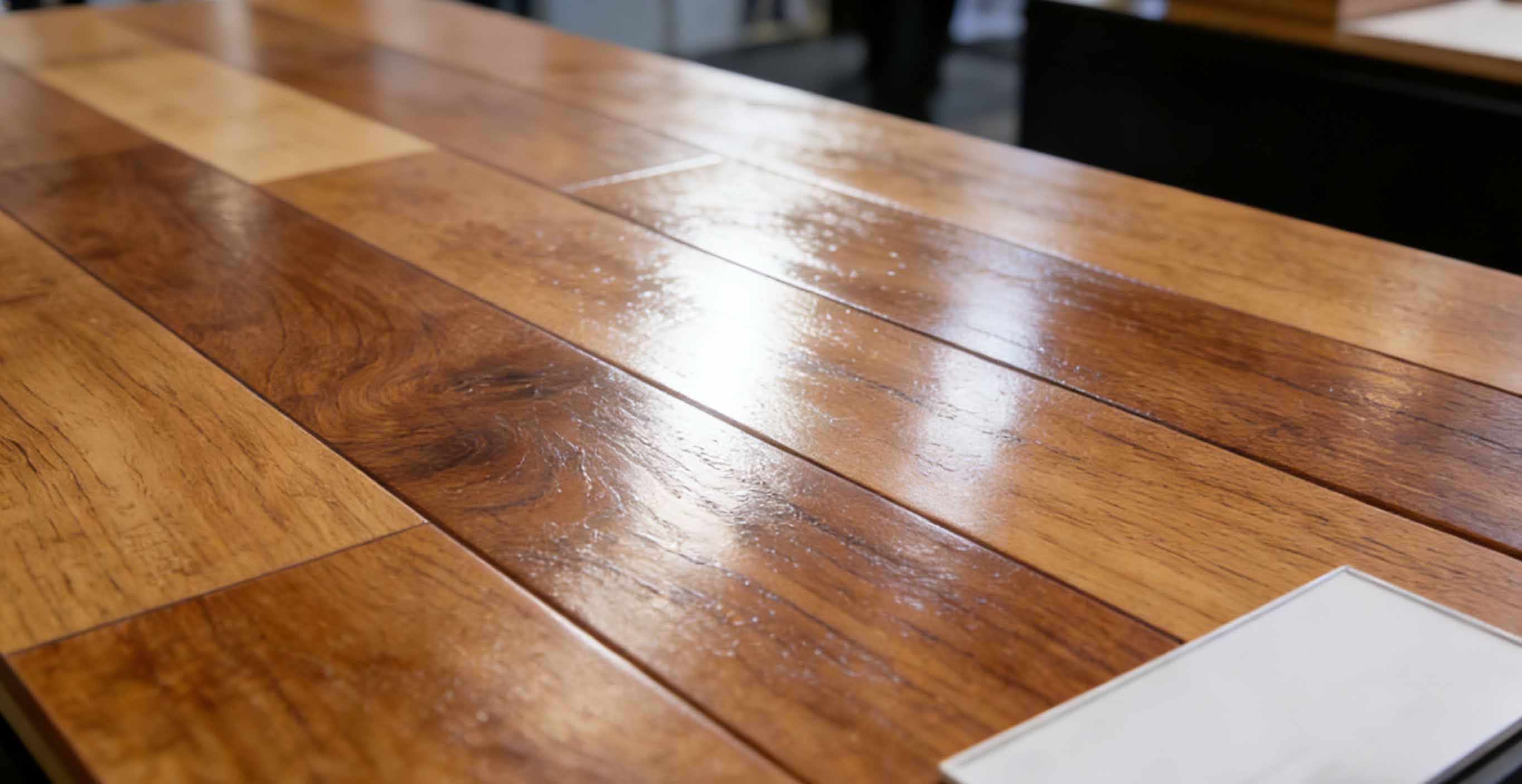
Iterative Upgrading of SPC/WPC/LVT: Resilient Flooring Enters the Era of "Performance Peak"
Driven by the dual upgrading of the building decoration materials industry and consumer demand, resilient flooring has become one of the fastest-growing segments in the flooring industry. Among them, the three core categories – SPC (Stone Plastic Composite Flooring), WPC (Wood Plastic Composite Flooring) and LVT (Luxury Vinyl Tile) – are experiencing a period of technological explosion. All-dimensional iterative upgrading, from material formulation and structural design to process innovation and functional expansion, has enabled resilient flooring to break through traditional performance boundaries and officially enter the era of "Performance Peak".
From May 27 to 29, 2026, DOMOTEX asia/CHINAFLOOR, the flagship exhibition of the Asia-Pacific flooring industry, will kick off at the National Exhibition and Convention Center (Shanghai). Top global flooring brands will showcase the latest technological achievements of SPC/WPC/LVT, presenting a technological feast of resilient flooring for industry practitioners such as general distributors, brand manufacturers and purchasers.
Restructuring of Technological Core: The Three Major Categories Break Through Performance Boundaries
SPC: Rigidity Upgrading & Lightweighting, Scaling New Heights in Ultimate Stability
As the "rigid representative" of resilient flooring, the technological iteration of SPC flooring focuses on the dual optimization of substrate formulation and production processes. The new generation of SPC products has achieved lightweight upgrading on the basis of maintaining high rigidity and a low expansion coefficient by adjusting the ratio of calcium carbonate to PVC resin, reducing the board weight by 15%-20% and significantly cutting transportation and construction costs. Meanwhile, high-end SPC products adopt nano-grade wear-resistant coatings, with the wear resistance grade breaking through the AC5 commercial standard and water absorption rate close to zero, further enhancing their applicability in humid and high-traffic scenarios such as kitchens, bathrooms and commercial complexes. Nano silver ion antibacterial SPC flooring launched by enterprises such as Daio Paper of Japan has passed the ISO 22196 international antibacterial certification, becoming the preferred flooring material for medical and elderly care scenarios.
WPC: Optimal Foot Feel and Environmental Protection, a Strong Comeback as a New Market Favorite
After SPC has long dominated the resilient flooring market, WPC flooring has made a strong comeback by virtue of its comfortable foot feel and ecological environmental protection. The new generation of WPC products optimizes the composite process of wood flour and plastic, improving the sound insulation and shock absorption effect of the boards with the impact absorption performance increased by more than 30%, and at the same time, the tolerance to the flatness of the ground base is significantly enhanced. In terms of environmental protection, mainstream brands all adopt formulations free of phthalate plasticizers and with low VOC emissions, and some products even incorporate bio-based materials, reducing the carbon footprint by more than 30%. In addition, WPC flooring is upgraded to super large specifications; the longer and wider boards not only bring a more seamless visual effect but also improve installation efficiency, making it a cost-effective choice for residential decoration and light commercial spaces.
LVT: Integration of Simulation and Functionality, Double Peaks in Design and Performance
As the "design benchmark" of resilient flooring, the technological upgrading of LVT flooring centers on two cores: high-definition simulation and functional expansion. Relying on high-precision digital inkjet printing and Embossed in Register (EIR) technology, the new generation of LVT products can 1:1 restore the texture and touch of solid wood and natural stone, and even accurately reproduce wood grain knots and stone vein trends, reaching a new height in aesthetic expressiveness. At the same time, the functional attributes of LVT are continuously enriched; antibacterial, mildew-proof, antistatic and other functional coatings have become standard configurations, and some brands have even launched intelligent temperature-controlled LVT flooring integrated with carbon fiber heating films that can link with smart home platforms, with its penetration rate in the high-end residential market rising steadily. In 2025, the scale of China's LVT market exceeded 35 billion yuan with a compound annual growth rate of over 18%, making it the fastest-growing category in resilient flooring.
Industrial Trend Transformation: Resilient Flooring Enters a Stage of High-Quality Development
Environmental Protection as the Core Driving Force, Green Certification as a Market Access Threshold
Under the background of the "Dual Carbon" goals and the global carbon neutrality trend, green and low-carbon has become the core development direction of the resilient flooring industry. On the upstream raw material side, the application proportion of environmentally friendly materials such as recyclable PVC, bio-based plasticizers and recycled wood flour is continuously increasing; on the production side, enterprises are accelerating the layout of zero-carbon factories and reducing energy consumption and carbon emissions through process optimization; on the product side, domestic and foreign environmental certifications such as FloorScore, GREENGUARD Gold and China Green Building Material Product Certification have become the "hard thresholds" for brands to enter engineering collective procurement and high-end home furnishing stores.
Diversified Application Scenarios, Category Upgrading from Substitution to Mainstream
Resilient flooring has evolved from a traditional "substitute flooring material" to a mainstream building material for all scenarios, with its application boundaries continuously expanding. In the residential field, it has become the first choice for hardcover houses and old house renovation by virtue of its waterproof, wear-resistant and easy-to-clean characteristics; in the commercial field, it covers offices, retail, catering and other scenarios; in the professional field, the demand for antibacterial, anti-slip and shock absorption in medical, education, elderly care and other scenarios has driven the development of resilient flooring towards functionalization and customization. Data shows that in 2024, China's SPC flooring export volume exceeded 5.2 billion US dollars, a year-on-year increase of 18.7%. The Asia-Pacific region has even become the world's largest consumer market for resilient flooring, accounting for more than 40% of the total.
Collaborative Innovation of the Industrial Chain, Leading Brands Driving Industry Upgrading
The technological upgrading of resilient flooring cannot be separated from the collaborative innovation of the entire industrial chain, forming an innovation closed loop among upstream raw material enterprises, midstream manufacturing enterprises and downstream application enterprises. International brands such as Tarkett, Armstrong and Mohawk continue to lead the high-end market with their global technological layout; domestic leading brands such as Shengxiang and KENTIER form a cluster effect in the mid-end market by virtue of cost advantages and rapid response capabilities, and some enterprises have obtained the qualification to export to the high-end European and American markets. The 2026 DOMOTEX asia/CHINAFLOOR exhibition gathers more than 1,500 global flooring brands, which will become a core exchange platform for collaborative innovation of the industrial chain and promote the further implementation and popularization of resilient flooring technologies.
Amid the Industry Boom, DOMOTEX asia/CHINAFLOOR Becomes the Core Grasp
As the largest and most influential professional flooring B2B exhibition in the Asia-Pacific region, DOMOTEX asia/CHINAFLOOR has always stood at the forefront of industry technology and become a core platform for the technological iteration and market promotion of resilient flooring. This exhibition will set up an exclusive exhibition area for resilient flooring, focusing on displaying the latest products and technologies of SPC/WPC/LVT. At the same time, it will hold professional events such as the Flooring Innovation Summit, inviting industry leaders and technical experts to interpret the development trends and market opportunities of resilient flooring.
The exhibition also launches the Buyer Club, providing VIP exclusive services for general distributors, home furnishing store purchasers and wholesalers, realizing accurate matching between brand manufacturers and purchasers, and helping enterprises seize the market dividends of the "Performance Peak" era of resilient flooring. In addition, the exhibition links with concurrent events such as BUILD ASIA and cadex, realizing cross-border integration of flooring with the architecture and design fields, and expanding more application scenarios and cooperation opportunities for resilient flooring.
The Future of Resilient Flooring: Unbounded Technology, Further Performance Breakthroughs
The iterative upgrading of SPC/WPC/LVT not only has brought the performance of resilient flooring to an unprecedented height but also redefined the innovation direction of the flooring industry. In the future, resilient flooring will continue to develop towards intellectualization, customization and sustainability: functions such as intelligent perception, temperature control and self-cleaning will become new technological growth points; customized products for different scenarios will be further popularized; the whole-life-cycle environmental protection concept will run through the entire process of raw materials, production, use and recycling.
About DOMOTEX
DOMOTEX asia/CHINAFLOOR has always resonated with the flooring industry at the same frequency, empowering the reconstruction of industry value with a global vision, professional services and the entire industrial chain resources, and becoming a core support for flooring enterprises to transform into space solution service providers. In the wave of value reconstruction, only by complying with the trend, taking the initiative to transform, integrating resources and creating new value with spatial thinking can all participants in the flooring industry gain a firm foothold in the new ecology and jointly promote the floor covering industry towards a more valuable and sustainable future.
FAQ
Q: What are the core performance improvements of the new generation of SPC flooring compared with traditional products?A: The new generation of SPC flooring has achieved dual upgrading of rigidity and lightweighting, with the board weight reduced by 15%-20%. Meanwhile, the nano-grade wear-resistant coating has made the wear resistance grade break through AC5, and the water absorption rate is close to zero. Some high-end products have also added antibacterial functions, passed international antibacterial certification, and are applicable to a wider range of scenarios.
Q: Why can WPC flooring stage a strong market comeback?A: The core reason is that the new generation of WPC flooring has optimized the composite process, greatly improving the comfortable foot feel and sound insulation and shock absorption effect, and at the same time, it has a stronger tolerance to the flatness of the base. In addition, the environmental protection attributes have been upgraded; phthalate-free and low VOC have become standard configurations, which conform to the market's green consumption demand. The super large specification boards also highlight its aesthetic and construction advantages.
Q: What exclusive layouts does the 2026 DOMOTEX asia/CHINAFLOOR exhibition have in the field of resilient flooring?A: The exhibition sets up an exclusive exhibition area for resilient flooring to focus on displaying the latest products and technologies of SPC/WPC/LVT; holds the Flooring Innovation Summit to interpret industry trends; launches the Buyer Club to realize accurate matching between brand manufacturers and purchasers, and also links with concurrent events in the architecture and design fields to achieve cross-border integration.
Q: What technologies mainly support the upgrading of the simulation degree of LVT flooring?A: It mainly relies on high-precision digital inkjet printing technology and Embossed in Register (EIR) technology, which can 1:1 restore the texture, touch and even detailed features of solid wood and natural stone, making the product's aesthetic expressiveness reach a new height and becoming a benchmark in the field of flooring design.
Q: What are the core standards for the environmental certification of resilient flooring at present?A: At the international level, the main certifications are FloorScore and GREENGUARD Gold, while at the domestic level, China Green Building Material Product Certification is the core. These certifications have become an important access threshold for brands to enter engineering collective procurement and high-end home furnishing stores.
Q: Why has the Asia-Pacific region become the world's largest consumer market for resilient flooring?A: The core reasons are the accelerated urbanization process and the improved consumption capacity of the middle class in the Asia-Pacific region. At the same time, the policies of prefabricated buildings and the expansion of the old house renovation market have led to a surge in demand for waterproof, wear-resistant and cost-effective resilient flooring. In addition, the technological upgrading and capacity layout of local enterprises have also promoted market popularization.
Q: What are the future technological development directions of resilient flooring?A: In the future, it will develop towards intellectualization, customization and sustainability. Functions such as intelligent temperature control, self-cleaning and intelligent perception will become new growth points; customized products for different scenarios will be further popularized; the whole-life-cycle environmental protection concept will run through the industrial chain, and the application proportion of recyclable materials and bio-based materials will continue to increase.
Q: For flooring general distributors and wholesalers, how to seize the market dividends of resilient flooring?A: They can connect with the latest products and technologies of top global brands by participating in professional exhibitions such as DOMOTEX asia/
CHINAFLOOR; pay attention to SPC/WPC/LVT products with environmental certification and performance upgrading; rely on the purchaser matching service of the exhibition to accurately connect with high-quality brands and layout a full-scenario product system.


 May 26-28, 2027
 National Exhibition and Convention Center (Shanghai)