16 Sourcing Tips for International Buyers of Blended Carpets at DOMOTEX Asia
In recent years, the blended carpet industry has witnessed a dual transformation driven by eco-friendly material innovation and process upgrading. Green and low-carbon features have become the core competitiveness of products, and technological iteration has significantly boosted product quality and added value. This not only brings new opportunities of high premium and high repurchase rate for international buyers and traders, but also raises higher requirements for procurement decisions. How to accurately select upgraded blended carpets that fit their own channels, meet compliance standards and offer the best cost performance on-site at DOMOTEX Asia has become the key for international buyers to seize market opportunities. Combining the core resources of DOMOTEX Asia, this guide sorts out 6 core procurement dimensions, analyzes 10 key differences between domestic and international buyers, and summarizes 16 practical on-site procurement skills, providing all-round support for international buyers to complete procurement efficiently and achieve "profitable procurement".
I. Core Procurement Dimensions: 6 Pillars to Lay a Solid Foundation for Procurement
The upgrading of eco-friendly materials and processes for blended carpets is essentially a product iteration aligned with terminal consumption trends and industry policy directions. International buyers must focus on 6 core dimensions: compliance first, quality adaptation, cost control, terminal alignment, after-sales support, and long-term collaboration. Each dimension is matched with exclusive practical skills to avoid blind procurement.
Compliance First: Reject "Fake Environmental Protection" and Uphold Business Bottom Lines
As the top procurement principle, on-site verification of 3 types of core documents is required: original environmental certification (OEKO-TEX 100, GRS, etc.; photocopies must be stamped with the official seal and verified via QR code), product test reports covering 12 core indicators (testing institutions must hold dual CMA and CNAS qualifications), and the supplier's pollutant discharge permit. According to 2025 industry data, the return rate of non-compliant products reaches 38%, while green certified products can achieve a 5%-15% premium—compliance is the foundation of profitability.
Quality Adaptation: Reject "Concept Hype" and Deliver Practical Value
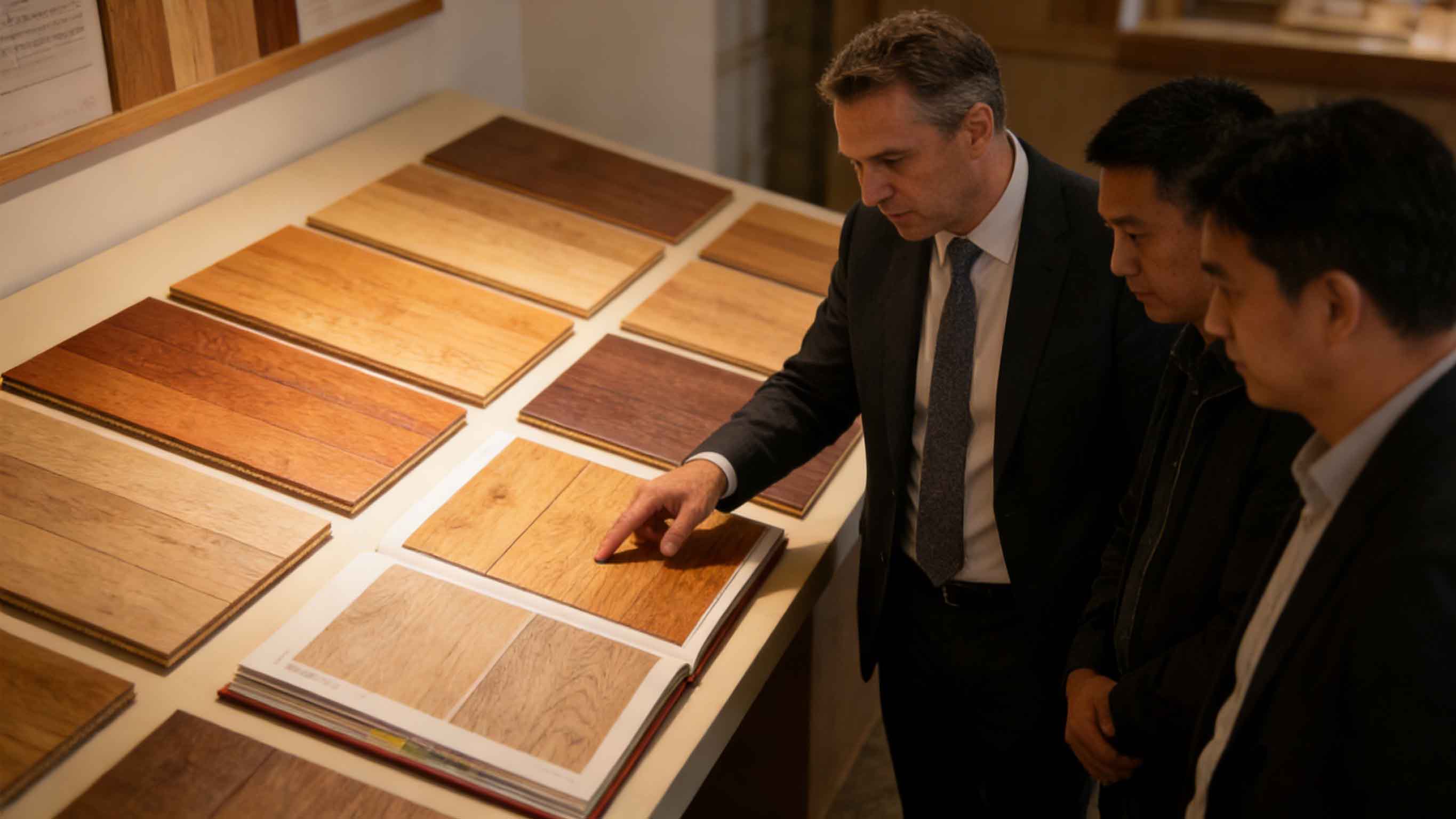
Verify the authenticity of process upgrading through the three steps of observation, touch and testing: check the weaving density (≥180 knots per square inch for qualification), feel the texture and smell (soft without burrs, no pungent odor), and test abrasion and color fastness (no fading after 3 wipes with a damp cloth, no scratches from light key strokes). Focus on three core practical selling points: wear resistance, easy cleaning and high aesthetic value.
Cost Control: Reject "Low-Price Traps" and Balance Short-Term and Long-Term Benefits
Eco-friendly upgrading has increased the average procurement unit price by 8%-15%. Buyers must abandon the "low-price first" logic and calculate the comprehensive full-chain cost including procurement, logistics, after-sales and compliance. Leverage exhibition advantages to secure triple benefits: exclusive price, bulk discount and logistics subsidy. The after-sales cost of eco-friendly upgraded products can be reduced by 22%, offering broader long-term profit margins.
Terminal Alignment: Reject "One-Size-Fits-All" and Precisely Match Channels
Select products based on core channels: high-end wool + bio-based fiber blended carpets for mid-to-high-end offline stores, standardized recycled PET fiber blended carpets for e-commerce channels, high-wear-resistance digital woven carpets for engineering channels, and cost-effective functional carpets for home improvement channels. Products aligned with channels can boost inventory turnover rate by more than 35%.
After-Sales Support: Reject "After-Sales Absence" and Consolidate Terminal Services
Clarify the supplier's after-sales capabilities before procurement and require three core services: installation guidance, maintenance training and a rapid response mechanism. A sound after-sales system can increase the repurchase rate of terminal customers by 34.2%. At the same time, clearly define the warranty period (3-5 years) and coverage to avoid after-sales disputes.
Long-Term Collaboration: Reject "Short-Term Cooperation" and Bind with High-Quality Suppliers
Prioritize suppliers with technological iteration capabilities and stable production capacity. Agree in advance on terms for long-term cooperation such as price protection, priority supply of new products and joint market promotion. Realize collaborative product optimization and market expansion between supply and demand sides to build a differentiated competitive advantage.
II. Core Differences Between Domestic and International Buyers: 10 Dimensions to Precisely Adapt Procurement Strategies
In blended carpet procurement, there are 10 core differences between domestic and international buyers due to varying market environments, policy requirements, terminal demands and operation models. International buyers must clarify their own positioning, and based on these differences, accurately connect with suppliers and optimize procurement strategies on-site at DOMOTEX Asia.
Compliance Requirements: International buyers focus on territorial compliance of target markets, requiring verification of corresponding certifications for the EU, US, Southeast Asia, etc., while avoiding CBAM carbon tariffs; domestic buyers only need to meet local policy requirements such as China's Ten-Ring Certification and GRS Certification.
Product Demands: International buyers prioritize personalization + functionalization, with custom demands for patterns, sizes and functions, and high requirements for antibacterial, flame retardant and stain-resistant features; domestic buyers focus on cost performance + standardization, mainly purchasing conventional styles with minimal custom demands.
Procurement Volume: International buyers focus on large batches + long-term replenishment (single order ≥500 square meters), requiring suppliers to ensure continuous overseas inventory replenishment; domestic buyers focus on small batches + frequent purchases (single order 50-200 square meters) with high purchase frequency and emphasis on rapid replenishment.
Cost Accounting: International buyers calculate full-chain costs (procurement, logistics, customs clearance, tariffs, after-sales, etc.), with low sensitivity to unit prices and focus on premium space; domestic buyers only pay attention to procurement unit prices, with low attention to additional costs, making them prone to low-price traps.
Delivery Demands: International buyers accept long delivery cycles + overseas adaptation (15-30 days), requiring services such as overseas warehouse stocking and cross-border logistics connection; domestic buyers demand short delivery cycles + local distribution (3-7 days), prioritizing suppliers with domestic warehousing and free delivery.
After-Sales Demands: International buyers need cross-border after-sales + training support, accept 48-hour response, and require cross-border return and exchange, overseas maintenance guidance and terminal selling point training; domestic buyers focus on local after-sales + rapid response, demanding 24-hour on-site service with low demand for training support.
Cooperation Model: International buyers tend to long-term binding and collaborative development, signing annual/quarterly cooperation agreements to jointly optimize products and expand overseas markets; domestic buyers focus on flexible cooperation + short-term profitability, changing suppliers at any time according to market demand with low cooperation stability.
Certification Cognition: International buyers have in-depth understanding and strict requirements for international authoritative certifications, requiring original GRS, OEKO-TEX 100 certificates and traceability documents; domestic buyers have loose certification requirements, some only needing simple test reports with no traceability demands.
Market Layout: International buyers focus on global market layout, requiring products to adapt to consumption habits and usage scenarios in different countries; domestic buyers only focus on local regional markets, with products only needing to fit domestic home furnishing and engineering scenarios.
Risk Control: International buyers pay attention to full-chain risk management and control, focusing on avoiding compliance, logistics and exchange rate risks; domestic buyers only care about product quality risks with no awareness of cross-border risks such as logistics and exchange rates.
III. 16 Practical On-Site Procurement Skills at DOMOTEX Asia for Efficient Screening and Precise Connection
DOMOTEX Asia gathers high-quality domestic and international blended carpet suppliers such as Jinbao Huasheng, Xingyue Carpet and Interface. During the exhibition, suppliers launch exclusive procurement policies and display the latest eco-friendly process products. Mastering 16 practical skills enables international buyers to complete procurement efficiently from six links—supplier screening, product selection, on-site negotiation, cost control, compliance risk avoidance and post-exhibition follow-up—improving procurement quality and efficiency.
(1) Supplier Screening: 3 Skills to Lock in High-Quality Partners
Qualification Verification: Request three types of materials on-site: environmental certification, process certification and compliance qualification. For GRS certification, additionally verify the Transaction Certificate (TC) to ensure the traceability of recycled material sources, rejecting "fake upgraded" suppliers without traceability or fake certifications.
Strength Evaluation: Evaluate on-site from three dimensions—production capacity (annual output ≥500,000 square meters, ≥3 eco-friendly production lines), customization capability (prototyping in 3-5 days, minimum order 50 square meters) and exhibition reputation (exhibiting for more than 3 consecutive years, high on-site foot traffic) to ensure supply stability.
Benefit Negotiation: Proactively negotiate exhibition-exclusive price discounts (5%-15%), free samples + promotional material support, and full-chain after-sales support including warranty, training and recycling to improve procurement cost performance.
(2) Product Selection: 5 Skills to Precisely Match Terminal Channels
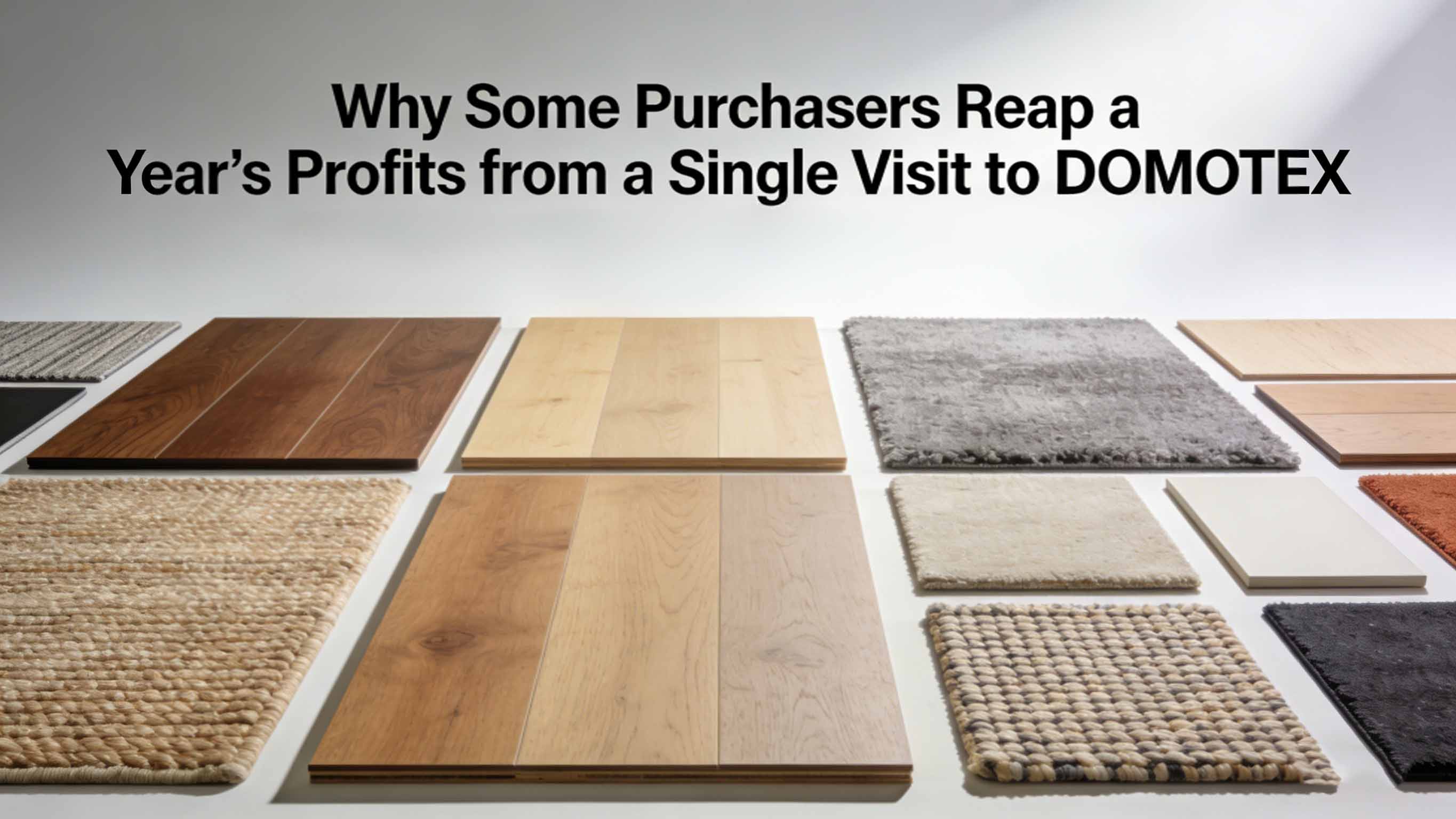
Recycled Fiber Carpet Selection: Prioritize styles with recycled fiber content ≥40% and abrasion resistance ≥80,000 cycles, suitable for e-commerce and mid-end home improvement channels, featuring affordable environmental protection, durability and easy maintenance.
Bio-Based Fiber Carpet Selection: Select styles with bio-based content ≥30% and EU Ecolabel certification, suitable for high-end home improvement and star hotel channels, featuring natural high-end quality and low-carbon environmental protection.
Natural Fiber Carpet Selection: Choose styles with natural fiber content ≥60% and a combination of intangible cultural heritage craftsmanship and digital technology, suitable for high-end home furnishing and gift channels, featuring premium texture and personalized customization.
Functional Carpet Selection: Opt for wool + eco-friendly nylon blended styles with antibacterial rate ≥99% and B1 flame retardant grade, suitable for engineering and public space channels, featuring multi-functionality, high durability and easy maintenance.
General Selection Skill: Test pilling, linting and color fastness on-site, and select products combined with the pricing strategy of your own channels. Avoid purchasing niche products with no selling points to reduce inventory risks.
(3) On-Site Negotiation: 5 Skills to Lock in Cooperation Advantages
Clear Demand Communication: Sort out core demands such as materials, specifications, batch size and delivery cycle in advance, and convey them clearly on-site to avoid information deviation.
Quotation Verification: Require suppliers to provide detailed quotation breakdowns, separating costs of main materials, auxiliary materials, processing and packaging to avoid hidden fees.
Customization Agreement: Clarify prototyping cycle, customization costs and acceptance standards for customized products, and record them in negotiation minutes to avoid customization disputes.
Logistics Connection: For cross-border procurement, define the logistics bearer, overseas warehouse connection method and customs clearance supporting services, and agree on compensation clauses for logistics delays.
Policy Lock-In: Sign a procurement intention agreement on-site to lock in exhibition-exclusive discounts, tiered pricing, credit period (30-60 days) and other policies to avoid policy changes after the exhibition.
(4) Cost Control: 2 Skills to Achieve Low Cost and High Profitability
Bargaining Skill: Connect with 3-5 suppliers of the same type, force concessions with reasonable quotations, strive for double discounts through bulk procurement and long-term cooperation, and form a procurement alliance with peers to share costs.
Batch Optimization Skill: Small and medium buyers adopt the "small batch, multiple frequency" procurement model; powerful buyers adopt "bulk price lock-in + reserved inventory"; for customized products, conduct sample testing before bulk procurement to balance inventory and demand.
(5) Compliance Risk Avoidance: 1 Skill to Uphold Procurement Bottom Lines
Full-Chain Risk Avoidance: Reject verbal commitments from suppliers; record all agreements on environmental protection, quality, price and after-sales in the contract, and clarify breach of contract compensation clauses. Be alert to products priced more than 15% below the industry average; use the exhibition's free testing service to screen product environmental and quality indicators on-site to avoid four major traps: fake environmental protection, process hype, low-price and poor-quality products, and cooperation traps.
(6) Post-Exhibition Follow-Up: 1 Skill to Ensure Procurement Implementation
Efficient Follow-Up: Connect with suppliers within 3 working days after the exhibition to confirm order details and delivery cycle, and conduct a secondary test on samples. Quickly launch products to the terminal market and carry out promotion combined with the selling points of eco-friendly and process upgrading, realizing rapid product monetization with the help of exhibition resources.
IV. Exhibition Procurement Summary and Action Recommendations
DOMOTEX Asia is a core opportunity for international buyers to grasp the eco-friendly and process upgrading trends of blended carpets, screen high-quality supply sources and expand cooperation channels. Buyers should carry out procurement work with the 6 core dimensions as the foundation, 10 key differences as the guide, 16 practical skills as the means, and adhere to the principle of "compliance as the bottom line, quality as the core, cost as the key, and terminal as the orientation".
1. Pre-Exhibition
Clarify your own channels, procurement budget and product positioning; check the list of exhibiting suppliers and exhibition area layout in advance, with a focus on the green flooring zone; sort out core procurement demands and formulate a detailed procurement plan.
2. On-Site at the Exhibition
Focus on connecting with high-quality suppliers with R&D capabilities for eco-friendly materials and process upgrading; verify qualifications, test quality and negotiate procurement policies on-site; lock in 2-3 core cooperative suppliers, sign procurement intention agreements and strive for exhibition-exclusive benefits.
3. Post-Exhibition
Timely connect with suppliers to confirm order details and conduct a secondary test on procurement samples to ensure products meet the compliance requirements and quality standards of the target market. Quickly launch upgraded blended carpets to the terminal market, and carry out promotion activities such as offline display, e-commerce live streaming and home improvement cooperation combined with the selling points of eco-friendly and process upgrading. Leverage product advantages to boost sales and profit margins.
In the future, the eco-friendly and process upgrading of blended carpets will continue to deepen, and green low-carbon, functional integration and personalized customization will become the market mainstream. International buyers must keep up with industry trends, clarify the 10 core differences from domestic buyers, leverage the platform advantages of DOMOTEX Asia, and apply the 16 practical procurement skills to achieve precise procurement, scientific management and deep cultivation of the terminal market. Rely on upgraded products to build a differentiated competitive advantage, continuously seize market opportunities in the industry transformation and achieve long-term and stable profitability
About DOMOTEX Asia
At a crucial time for the transformation and upgrading of the global flooring industry, DOMOTEX Asia/CHINAFLOOR, the flagship professional flooring event in the Asia-Pacific region, grandly opened at the National Exhibition and Convention Center in Shanghai. This year's exhibition covered an area of over 230,000 square meters, bringing together more than 1,600 exhibitors from around the world and attracting over 85,000 professional visitors for exchange and procurement. The flooring material accessories, consumables, and paving technology zones were upgraded again, focusing on "intelligent, environmentally friendly, efficient, and adaptable"
features. These zones showcased a full range of upgraded products, including underlayment, molds, installation tools, cleaning equipment, adhesives, and decorative products, as well as new intelligent, refined, andintegrated paving technologies. The exhibition comprehensively interpreted the latest development trends in the flooring supporting industry, with intelligent paving technology and environmentally friendly accessories and consumables becoming core highlights, leading the global flooring supporting industry towards high-quality, green, and intelligent development.
As a full-chain service platform for the flooring industry, DOMOTEX Asia always keeps abreast of industry developments and accurately grasps changes in market demand
FAQ
Q1: What are the 6 core dimensions for international buyers to procure blended carpets?
A1: The 6 core dimensions are compliance first, quality adaptation, cost control, terminal alignment, after-sales support and long-term collaboration, which are the basic principles to avoid blind procurement and ensure profitable cooperation.
Q2: What is the core difference in compliance requirements between international and domestic blended carpet buyers?
A2: International buyers focus on the territorial compliance of target markets (verify EU/US/Southeast Asia certifications and avoid CBAM carbon tariffs); domestic buyers only need to meet local Chinese standards such as the Ten-Ring Certification and GRS Certification.
Q3: What are the 3 key skills for screening blended carpet suppliers on-site at DOMOTEX Asia?
A3: The three skills are: 1. Verify qualifications (check original eco-certifications and GRS Transaction Certificate for traceability); 2. Evaluate strength (assess production capacity, customization ability and exhibition reputation); 3. Negotiate benefits (strive for exhibition-exclusive discounts, free samples and full-chain after-sales support).
Q4: What are the core indicators for selecting different types of blended carpets on-site at the exhibition?
A4: Core indicators include: recycled fiber carpets (≥40% recycled content, ≥80,000 abrasion cycles); bio-based fiber carpets (≥30% bio-based content, EU Ecolabel certification); natural fiber carpets (≥60% natural content, intangible heritage + digital craft); functional carpets (≥99% antibacterial rate, B1 flame retardant grade).
Q5: What key skills should international buyers master for cross-border procurement negotiation at the exhibition?
A5: Key negotiation skills: clarify core demands in advance; verify detailed quotation breakdowns to avoid hidden fees; define cross-border logistics and customs clearance services with compensation clauses for delays; sign an intention agreement to lock in exhibition-exclusive policies (discounts, credit period, etc.).
Q6: What are the core skills for cost control and compliance risk avoidance in exhibition procurement?
A6: For cost control: bargain with 3-5 suppliers and optimize purchase batches (small batches/frequent orders or bulk price lock-in). For compliance avoidance: put all agreements in writing; alert to products 15% below industry average; use the exhibition’s free testing service to screen eco and quality indicators.
Q7: What is the key practical step for post-exhibition follow-up of blended carpet procurement?
A7: Connect with suppliers within 3 working days to confirm order details and conduct a secondary test on samples; quickly launch the procured carpets to the terminal market and promote them with eco-friendly and process-upgraded selling points to realize rapid monetization.


 May 26-28, 2027
 National Exhibition and Convention Center (Shanghai)