Tips on how to verify the environmental certification of carpet and floor mat products
Against the global wave of green and low-carbon development, green procurement has become a key measure for B2B enterprises to operate in compliance and enhance core competitiveness. As commonly used consumables in offices, commercial spaces, industrial scenarios and other fields, eco-friendly carpets and floor mats — the authenticity of their environmental qualifications directly affects enterprises’ procurement compliance, downstream customer trust and ecological environmental responsibility. At present, chaos of "fake environmental protection" publicity occurs frequently in the market. Many suppliers exaggerate environmental advantages and forge test reports, bringing huge risks to B2B buyers. This article is specially created for B2B buyers, focusing on the core demand of verifying environmental qualifications of carpets and floor mats. It analyzes four dimensions: qualification documents, testing indicators, certification system and supply chain traceability, and provides professional and operable verification skills, helping buyers avoid procurement traps and accurately select products that meet environmental standards.
Amid the global wave of green and low-carbon development, green procurement has become an important measure for B2B enterprises to operate in compliance and enhance core competitiveness. As commonly used consumables in office, commercial, industrial and other scenarios, eco-friendly carpets and floor mats — the authenticity of their environmental qualifications is directly related to enterprises’ procurement compliance, downstream customer trust and ecological and environmental responsibility.
For B2B buyers, verifying the environmental qualifications of such products needs to avoid the trap of "fake environmental protection" publicity. They should conduct an in-depth analysis around the four core dimensions of qualification documents, testing indicators, certification system and supply chain traceability, taking into account professionalism, operability and comprehensiveness, to ensure that the purchased products truly meet environmental requirements.
The primary step is to verify the authenticity, completeness and validity of core qualification documents, which is the basis for verifying environmental qualifications.
B2B buyers should take the initiative to ask suppliers for complete third-party test reports, and focus on confirming the qualifications of testing institutions — they must have dual certifications of CMA (China Metrology Accreditation) and CNAS (China National Accreditation Service for Conformity Assessment). Only reports issued by such institutions have legal effect and credibility, avoiding false test data. The report should focus on key environmental indicators such as formaldehyde emission, TVOC (Total Volatile Organic Compounds), heavy metal dissolution and flame retardant content. The values shall clearly comply with domestic mandatory standards such as GB 18587 Limits of Harmful Substances in Carpets, Carpet Pads and Carpet Adhesives for Interior Decoration and Refurbishment Materials, GB 31701 Safety Technical Code for Infants and Children Textile Products (for products in children’s scenarios), or corresponding international standards such as ISO and ASTM. At the same time, check the report date to ensure the report is within the validity period (usually 1-2 years). If necessary, enter the report number on the official website of the testing institution to directly verify the authenticity of the report and specific testing details.
Secondly, focus on the environmental certification system of the whole product life cycle, and select products with authoritative certifications to reduce procurement risks. In the domestic market, give priority to products that have obtained Green Building Materials Certification (especially three-star certification), which covers the whole process of raw materials, production, use and waste disposal, and is the core endorsement of environmental protection for building materials in China. For international market procurement, key references can be made to authoritative certifications such as CRI Green Label Plus (the highest environmental certification of the Carpet and Rug Institute of the United States), OEKO-TEX 100 (baby-grade environmental certification, free of harmful substances) and the Nordic Swan Ecolabel.
Special attention should be paid to that the certification certificate must correspond to specific product models and specifications, rather than the general "overall certification" of the enterprise. You can check the validity and certification scope of the certificate through the official channels of the corresponding certification body by entering the certificate number or enterprise name, and confirm that the enterprise’s production process and environmental management system meet the certification requirements.
Furthermore, it is necessary to strengthen supply chain traceability and on-site verification to realize the whole-process control from raw materials to production. Require suppliers to provide environmental certificates of raw materials, and confirm whether the fibers (such as recycled polyester, natural wool), back adhesives, adhesives and other materials used in carpets and floor mats are recyclable and degradable eco-friendly materials, and whether they meet the international hazardous substance control requirements such as EU REACH Regulation and US TSCA. The use of raw materials containing banned flame retardants and toxic plasticizers shall be prohibited.
For suppliers with large-sum procurement and long-term cooperation, on-site inspection of their production workshops is recommended to verify whether the environmental protection production process is implemented, whether the waste gas, wastewater and waste residue treatment facilities are in normal operation, and whether there is a complete environmental emergency plan, so as to confirm that the production process is consistent with environmental protection publicity. In addition, suppliers can be required to provide cooperation cases and environmental acceptance data of similar products in the past to further verify their performance capacity and stability of environmental qualifications.
In summary, for B2B buyers to verify the environmental qualifications of eco-friendly carpets and floor mats, they need to check documents to distinguish authenticity, verify indicators to meet standards, inspect certifications to match models, and trace sources to control the whole process, with checks at all levels and multi-point verification. This can not only effectively avoid procurement risks and ensure enterprise compliance operation, but also promote the green upgrading of the supply chain, achieving a win-win situation of economic, social and environmental benefits.
In addition, B2B buyers also need to pay attention to the dynamic validity of environmental qualifications.
Some certification certificates and test reports have validity periods. It is necessary to clearly agree in the procurement contract that suppliers should update relevant documents in a timely manner to ensure that product environmental qualifications are compliant during the entire procurement cycle. Meanwhile, for cross-border procurement scenarios, additional verification is required to ensure that products meet the special environmental requirements of the target market, such as environmental standards related to EU CBAM (Carbon Border Adjustment Mechanism), US CARB P2 certification, etc., to avoid losses such as customs clearance obstruction and product recall caused by inconsistent qualifications. When communicating with suppliers, you can ask them to provide an environmental statement letter, clearly promising that the product’s environmental indicators are true and valid, and certification documents are traceable. If there is false publicity or inconsistent qualifications, the supplier shall bear corresponding liability for breach of contract. In addition, you can use channels such as industry associations and third-party quality inspection platforms to check the environmental credit rating of suppliers, and avoid enterprises with many environmental violation records, further reducing procurement risks. These details may seem cumbersome, but they can help B2B buyers build a comprehensive line of defense for environmental procurement, truly realize green procurement and compliant operation, and provide reliable environmental product protection for downstream customers, helping enterprises enhance core competitiveness in the wave of green development.
In conclusion, when verifying the environmental qualifications of carpets and floor mats, B2B buyers should closely follow the four cores: check documents to distinguish authenticity, verify indicators to meet standards, inspect certifications to match models, and trace sources to control the whole process, with checks at all levels and multi-point verification. They should not only keep the basic bottom line of qualification documents and testing indicators, but also attach importance to the authority of environmental certification and the integrity of supply chain traceability. Only in this way can we effectively avoid the risk of "fake environmental protection" procurement, ensure the compliant operation of enterprises, and convey the concept of green responsibility to downstream customers to enhance brand credibility. Green procurement is not a single link of verification, but a commitment to responsibility in the whole process. It is hoped that the skills provided in this article can help B2B buyers efficiently complete environmental procurement, promote the green upgrading of the supply chain, and achieve a win-win situation of economic, social and environmental benefits.
About DOMOTEX Asia
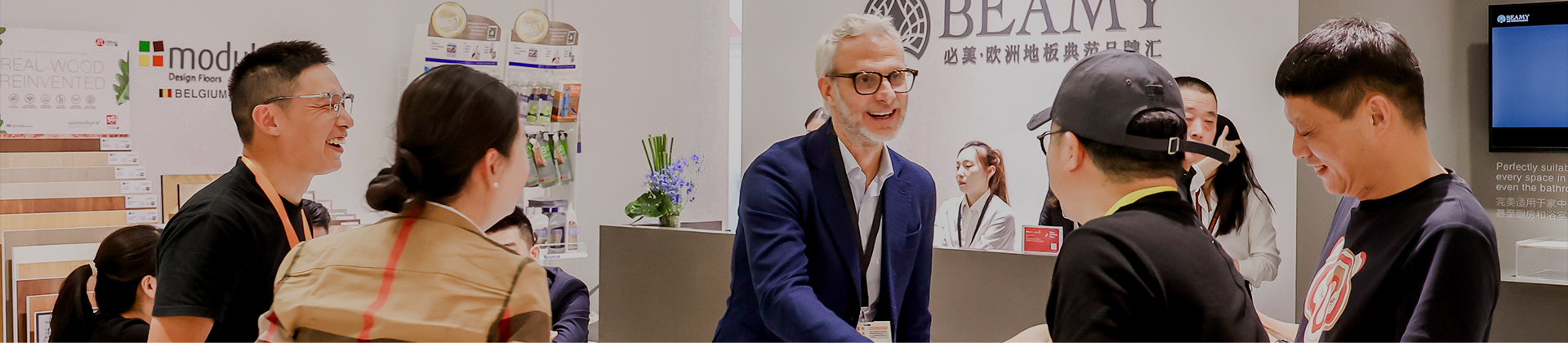
At a crucial time for the transformation and upgrading of the global flooring industry, DOMOTEX Asia/CHINAFLOOR, the flagship professional flooring event in the Asia-Pacific region, grandly opened at the National Exhibition and Convention Center in Shanghai. This year's exhibition covered an area of over 230,000 square meters, bringing together more than 1,600 exhibitors from around the world and attracting over 85,000 professional visitors for exchange and procurement. The flooring material accessories, consumables, and paving technology zones were upgraded again, focusing on "intelligent, environmentally friendly, efficient, and adaptable"features. These zones showcased a full range of upgraded products, including underlayment, molds, installation tools, cleaning equipment, adhesives, and decorative products, as well as new intelligent, refined, andintegrated paving technologies. The exhibition comprehensively interpreted the latest development trends in the flooring supporting industry, with intelligent paving technology and environmentally friendly accessories and consumables becoming core highlights, leading the global flooring supporting industry towards high-quality, green, and intelligent development.
As a full-chain service platform for the flooring industry, DOMOTEX Asia always keeps abreast of industry developments and accurately grasps changes in market demand.
FAQ
Q1: What are the four core dimensions for B2B buyers to verify environmental qualifications of eco-friendly carpets and floor mats?
A1: The four core dimensions are verifying qualification documents, checking testing indicators, reviewing authoritative certification systems, and conducting supply chain traceability, which help buyers completely avoid “fake environmental protection” risks.
Q2: What qualifications must third-party testing institutions have for valid test reports?
A2: Testing institutions must hold CMA (China Metrology Accreditation) and CNAS (China National Accreditation Service for Conformity Assessment) dual certifications, so that the test reports have legal effect and credibility.
Q3: What key environmental indicators should be focused on in test reports?
A3: Key indicators include formaldehyde emission, TVOC (Total Volatile Organic Compounds), heavy metal dissolution and flame retardant content, which must comply with standards like GB 18587, GB 31701, ISO or ASTM.
Q4: What authoritative environmental certifications are recommended for carpets and floor mats?
A4: Domestic: Three-star Green Building Materials Certification; International: CRI Green Label Plus, OEKO‑TEX 100, Nordic Swan Ecolabel. Certificates must match specific product models, not only enterprise-wide certification.
Q5: How to conduct supply chain traceability for eco-friendly carpets and floor mats?
A5: Require raw material environmental certificates; confirm materials meet EU REACH and US TSCA; for long-term partners, conduct on-site inspections of production lines and waste treatment facilities.
Q6: What extra checks are needed for cross-border procurement?
A6: Verify compliance with target market rules, such as EU CBAM carbon border standards and US CARB P2 certification, to avoid customs clearance problems or product recalls.
Q7: What contractual terms ensure long-term validity of environmental qualifications?
A7: Include clauses requiring suppliers to update certificates timely, provide a signed environmental statement, and bear liability for breach of contract if fake certifications or unqualified indicators are found.


 May 26-28, 2027
 National Exhibition and Convention Center (Shanghai)