Best Guide for International Buyers in Choosing a Carpet Supplier
Against the backdrop of the booming global carpet trade, the global high-end carpet market reached a scale of 12.8 billion US dollars in 2024 and is projected to exceed 15 billion US dollars by 2026. Europe and the US account for over 60% of the market share, while the Southeast Asian market is growing at a rate of 11.5%. Combining the 2026 global carpet industry trends and the pain points of international procurement, this article compiles the ultimate guide for international buyers to select carpet suppliers. It breaks down the entire process from preliminary research, core screening, on-site verification to cooperation guarantee, helping international buyers efficiently select high-quality carpet suppliers that meet their specific needs.
For international buyers, choosing a high-quality and reliable carpet supplier not only ensures product quality compliance and on-time delivery but also reduces procurement costs, avoids trade risks, and lays a solid foundation for long-term cooperation. However, faced with a huge number of carpet suppliers worldwide, especially the differences in qualifications, production capacity, services and compliance among suppliers in different regions, many international buyers easily fall into screening misunderstandings and miss out on high-quality partners.
Step 1: Preliminary Research
Clarify requirements, define the screening scope, and avoid blind selection. Before screening carpet suppliers, international buyers must first clearly define their procurement needs, which is the core premise of screening and the key to avoiding subsequent cooperation disputes. First, clarify the positioning of the procured products, including carpet types (commercial carpet, residential carpet, hand-knotted carpet, machine-made carpet, etc.), materials (wool, polyester, polypropylene, bio-based fiber, etc.), specifications and dimensions, design styles, as well as core parameters such as procurement volume, unit price budget and delivery cycle. Second, clarify the compliance requirements of the target market. There are significant differences in environmental, safety and quality standards for carpets in different countries and regions. For example, the EU market requires compliance with the REACH Regulation and OEKO-TEX 100 certification; the US market mandates adherence to the CRI Green Label Plus certification and California Proposition 65 standards; and the Southeast Asian market demands moisture-proof performance adapted to the local humid climate. Clarifying these standards in advance can quickly eliminate non-compliant suppliers and narrow down the screening scope.
Step 2: Collect Carpet Supplier Resources
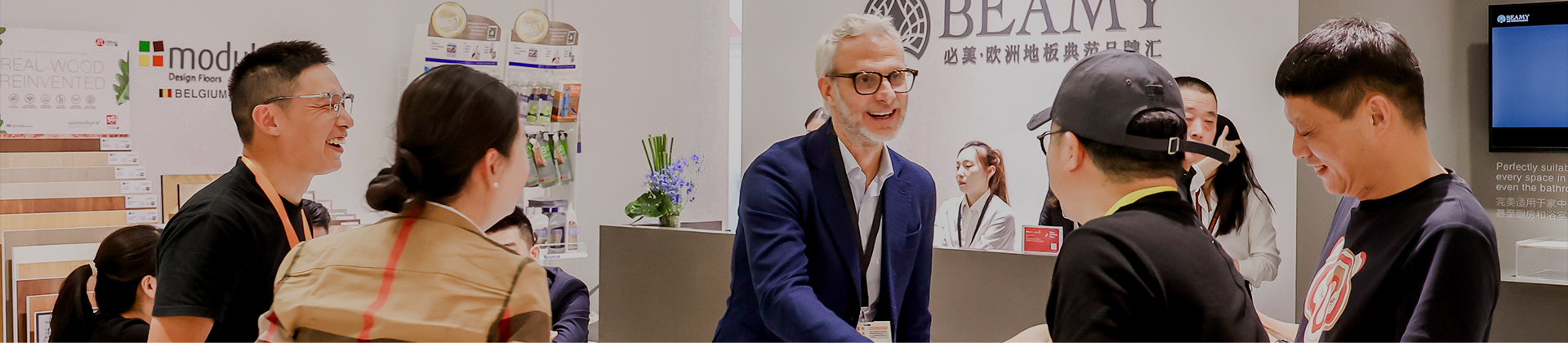
International buyers can collect carpet supplier resources through multiple channels to build an initial screening list. The core channels include industry flagship exhibitions, such as DOMOTEX Asia/CHINAFLOOR International Flooring Materials and Paving Technology Exhibition. This exhibition gathers more than 1,500 carpet and flooring auxiliary material enterprises worldwide, including well-known brands such as Haima, Shanhua, Ruixin and Shengrun. It serves as a core platform for international buyers to connect with high-quality suppliers, where they can inspect product quality on-site and negotiate cooperation details.
In addition, supplier information can be collected through international B2B platforms (e.g., Alibaba, Made-in-China), industry associations (e.g., China Carpet Association, American Carpet and Rug Institute), and peer recommendations. Initially screen out 3 to 5 suppliers with complete qualifications that align with their own demand positioning, and proceed to the next step of in-depth verification. It is important to note that preliminary research should focus on the geographical adaptability of suppliers. For example, when purchasing high-end hand-knotted carpets, priority can be given to suppliers in production areas such as China, Europe and the US; when purchasing cost-effective machine-made carpets, focus on suppliers in China, India and other production areas, balancing logistics costs and delivery efficiency.
Step 3: Core Screening
Conduct layered verification from four dimensions to lay a solid foundation for procurement. After compiling the initial supplier list, international buyers need to focus on four core dimensions for in-depth verification: qualification compliance, product quality, production and delivery capacity, and customized services. This is a key step in selecting high-quality suppliers and a core means to avoid procurement risks.
Dimension 1: Qualification and Compliance Verification
This is the "red line" for international procurement and a fundamental reflection of a supplier's strength. International buyers should focus on verifying the core qualifications of suppliers, including basic qualifications such as business license, production license and import and export right, to ensure that suppliers have legal production and operation as well as international trade qualifications. Second, conduct in-depth verification of product compliance certifications. In accordance with the requirements of the target market, check whether suppliers hold the corresponding authoritative certifications. For example, exports to the EU require the OEKO-TEX 100 certification (Category IV for decorative materials, governing harmful substance residues in carpets) and test reports on harmful substance control in line with the REACH Regulation; exports to the US need the CRI Green Label Plus certification and FloorScore certification; exports to Southeast Asia require local environmental and safety compliance certificates. In addition, buyers can verify whether suppliers have the ISO9001 Quality Management System Certification, ISO14001 Environmental Management System Certification, and GRS (Global Recycled Standard) certification (for eco-friendly carpets). These certifications not only prove that products meet quality and environmental standards but also reflect the supplier's production and management level. At the same time, it is necessary to verify the authenticity and validity of all qualification documents: the certificate number can be queried on the official website of the certification body to confirm that the certificate is not expired and the certification scope covers the procured products, preventing suppliers from providing fake qualifications.
Dimension 2: Product Quality Verification
This is the core premise of cooperation and directly affects the market acceptance of procured products. International buyers can request suppliers to provide samples for on-site testing, focusing on core indicators such as material purity, density, abrasion resistance, color fastness, flame retardancy and environmental performance of carpets. For example, wool carpets need to be tested for wool content; machine-made carpets for abrasion resistance cycles (≥10,000 cycles is recommended for commercial carpets); and eco-friendly carpets for the emission of harmful substances such as TVOC and formaldehyde, ensuring compliance with target market standards. Second, request suppliers to provide third-party test reports from institutions with authoritative qualifications such as CMA and CNAS to ensure the traceability of test results. At the same time, compare samples and test reports from different suppliers to select the one with the best quality and the most suitable for their own needs. In addition, attention should be paid to the supplier's product innovation capability, such as whether they can launch new degradable and low-carbon eco-friendly carpets, and whether they can integrate current popular design concepts—this is also an important factor in enhancing the competitiveness of procured products. For example, the "non-printed" long-pile carpets showcased at the 2026 exhibition, with their ultimate materials and colors as core selling points, achieved record-high sales. Such innovative products can help international buyers seize market opportunities.
Dimension 3: Production and Delivery Capacity Verification
This is to avoid problems such as "delivery delays" and "batch non-conformity". Based on their own procurement volume and delivery cycle, international buyers should verify whether the supplier's production capacity is matching. They can request suppliers to provide information such as photos of production workshops, detailed production lines and the number of employees to understand the production scale—for example, whether the supplier has a full-process automatic production line and can realize mass production and rapid prototyping (high-quality suppliers can complete rapid prototyping in 3-7 days). Second, verify the supplier's production cycle, delivery efficiency and logistics cooperation resources, such as whether the supplier has established long-term cooperation with international logistics giants such as DHL and FedEx, and whether they have overseas warehouse stocking capabilities (overseas warehouses covering core markets such as Europe, the US and Southeast Asia can greatly shorten the delivery cycle). Ensure on-time, high-quality and quantitative delivery, especially for bulk procurement and urgent orders, where production and delivery capacity are top priorities. For example, Tianjin Shengrun Carpet is equipped with imported high-precision jacquard weaving machines from Germany and has built a full-chain independent production closed loop. It can realize small-batch customization and rapid replenishment, with overseas warehouse stocking covering more than 30 countries and regions in Europe and the US, and the replenishment cycle controlled within 7-10 days, well adapting to the diverse delivery needs of international buyers.
Dimension 4: Customized Service and After-sales Support Verification
Adapt to the personalized procurement needs of international buyers and reduce subsequent cooperation risks. Many international buyers have personalized procurement needs, such as customizing carpet design patterns and specifications according to the aesthetic preferences of the target market, or customizing carpets with special functions such as wear resistance, slip resistance and flame retardancy according to the needs of commercial scenarios. Therefore, it is necessary to verify the supplier's customization capability, including whether they have a professional design team, whether they can quickly respond to customization needs, and whether the quality and delivery cycle of customized products are guaranteed. For example, Tianjin Haima Carpet has developed an intelligent jacquard design cloud platform, where customers can upload pattern files online, and the system automatically generates weaving parameters and cost accounting, compressing the sample delivery cycle to 4-6 days, which can efficiently meet personalized customization needs. Second, verify the supplier's after-sales support system, including the handling process for product quality problems, return and exchange policies, warranty period (high-quality suppliers usually offer a warranty period of ≥1 year), and whether they can provide cross-border full supply chain integrated services covering production, packaging, logistics, customs clearance and supporting compliance certifications. Especially for overseas procurement, a sound after-sales support system can effectively avoid product quality disputes and reduce procurement costs. In addition, verify the supplier's communication capability: whether they have a professional foreign trade team proficient in English and other international languages, who can timely respond to procurement needs and feedback production progress, avoiding cooperation disputes caused by poor communication.
Step 4: On-site Verification
A must for large-value procurement—confirm supplier strength and avoid cooperation traps. For large-value procurement and long-term cooperation suppliers, international buyers are recommended to conduct on-site inspections, which is the most direct and effective verification method to completely avoid problems such as "exaggerated publicity" and "fake qualifications" by suppliers.
On-site inspections focus on three core aspects:
Production site: Inspect the supplier's production workshops and the operation of production lines, verify whether the production processes and environmental treatment facilities meet standards, and whether the supplier has a sound production management system (e.g., whether waste gas, wastewater and solid waste treatment facilities are in normal operation, and whether digital and intelligent production control is realized).
Quality control link: Inspect the supplier's full-process quality inspection system including raw material inspection, in-process inspection and finished product inspection, and verify whether the quality inspection equipment is complete and the quality inspection standards are strict. For example, many carpet manufacturers in China have established 15 full-process quality inspection nodes to achieve homogeneous quality control for all product batches, and such suppliers should be given priority.
Enterprise strength: Inspect the supplier's warehousing scale, inventory status, employee quality and display of cooperation cases. Request suppliers to provide past international cooperation cases, such as cooperation records and customer evaluations with buyers in Europe, the US, Southeast Asia and other regions, to verify the supplier's international cooperation experience and performance capability. For example, Tianjin Haima Carpet's long-term cooperation with European five-star hotel groups fully demonstrates its product quality and delivery capability.
Face-to-face communication with the team: During the on-site inspection, international buyers can conduct face-to-face communication with the supplier's core person in charge, foreign trade team and production team to further clarify procurement needs and negotiate cooperation details, including unit price, payment method, delivery cycle, customization requirements and after-sales support. At the same time, observe the supplier's cooperation attitude and integrity—suppliers with poor communication, perfunctory attitude or concealing behaviors are recommended to be directly eliminated.
Step 5: Cooperation Negotiation and Risk Avoidance
Clarify details, sign a standardized contract, and protect the rights and interests of both parties. After preliminary research, core screening and on-site verification, international buyers can determine the final carpet supplier for cooperation and enter the cooperation negotiation stage. The core of this stage is to clarify cooperation details and sign a standardized contract to avoid subsequent cooperation risks.
Key Focuses of Cooperation Negotiation
Focus on five core details in cooperation negotiation:
Price negotiation: Negotiate a reasonable unit price with the supplier based on factors such as procurement volume, materials and specifications, and clearly define whether the price includes freight, tariffs, customs clearance fees, etc., to avoid additional charges later.
Payment method: It is recommended to adopt the "advance payment + final payment" model, with the advance payment ratio controlled at 30%-50%, and the final payment made after the product is accepted and cleared through customs smoothly to reduce payment risks.
Delivery cycle: Clarify the specific delivery time, delivery location and logistics method, and agree on the liability for breach of contract in case of delivery delays (e.g., the supplier shall bear corresponding compensation liabilities if delivery is not made on time).
Quality acceptance standards: Clarify product quality requirements and testing standards, agree on acceptance methods (e.g., random sampling inspection after arrival, third-party inspection), as well as the return and exchange process and compensation standards for non-conforming products.
Customized service details: For buyers with customization needs, details such as customized patterns, specifications, functions and color card standards (e.g., precise color matching with Pantone color card, Delta E ≤ 2 for color difference) must be clearly recorded in the negotiation minutes to avoid customization discrepancies later.
Sign a Formal Contract
Signing a contract is the key to protecting the rights and interests of both parties. International buyers should require suppliers to sign a standardized international trade contract, which shall clearly specify core clauses such as the basic information of both parties, detailed procured product information, qualification requirements, quality standards, delivery cycle, payment method, after-sales support, liability for breach of contract, and dispute resolution methods. In particular, the liability for product compliance must be clearly defined: if the supplier's products fail to pass customs clearance or are penalized by the target market due to non-compliance, the supplier shall bear all liabilities. At the same time, the contract shall adopt internationally accepted legal texts and agree on dispute resolution methods (e.g., arbitration, litigation) and jurisdiction to avoid ineffective resolution of subsequent disputes. In addition, it is recommended to include a sample confirmation clause in the contract, requiring the supplier to produce in accordance with the confirmed sample to ensure that the quality of bulk products is consistent with the sample.
Long-term Cooperation
Conduct regular review and maintenance to achieve mutual benefit and win-win results. For selected high-quality carpet suppliers, international buyers can establish long-term cooperative relationships, which not only reduces procurement costs and improves procurement efficiency but also entitles buyers to priority services and customization support from suppliers. In the process of long-term cooperation, two aspects of work need to be done well:
Regular review: After each procurement, evaluate the supplier's product quality, delivery efficiency, after-sales support and communication capability, summarize the advantages and disadvantages of cooperation, and timely communicate and optimize with the supplier. For example, put forward improvement requirements for problems such as excessively long delivery cycles and quality fluctuations, and urge the supplier to make rectifications.
Strengthen cooperation maintenance: Maintain regular communication with the supplier, timely feedback changes in market demand and product optimization suggestions (e.g., upgrading of environmental standards and changes in design styles in the target market), helping the supplier adjust product structure and improve product adaptability. At the same time, keep abreast of the supplier's latest products and technological innovation achievements to seize market opportunities. In addition, for suppliers with good performance in long-term cooperation, appropriately increase procurement volume, extend the cooperation period, or even sign a long-term cooperation agreement to achieve mutual benefit and win-win results for both parties.
For international buyers, the core of selecting carpet suppliers is "compliance as the bottom line, quality as the core, production capacity as the guarantee, and service as the support". There is no need to blindly pursue "low prices"; instead, more attention should be paid to the supplier's comprehensive strength and adaptability. By clarifying needs in the early stage, conducting layered screening and on-site verification in the mid-term, and standardizing cooperation and long-term maintenance in the later stage, international buyers can efficiently select high-quality carpet suppliers, avoid procurement risks and reduce procurement costs. At the same time, with the support of high-quality suppliers' products and services, buyers can enhance their competitiveness in the target market. Especially under the 2026 global carpet industry trends of greenization, intellectualization and personalization, selecting carpet suppliers with environmental compliance, innovation capability and comprehensive services is the key to achieving long-term and stable development. It is recommended that international buyers connect with more high-quality suppliers through industry flagship exhibitions such as DOMOTEX Asia, and conduct scientific screening and rational cooperation in accordance with this guide to maximize procurement value.
About DOMOTEX Asia
DOMOTEX Asia/CHINAFLOOR International Flooring Materials and Paving Technology Exhibition (hereinafter referred to as "DOMOTEX Asia"), the flagship professional flooring exhibition in the Asia-Pacific region, grandly opened at the National Exhibition and Convention Center (Shanghai). With the core theme of "New Momentum Through the Cycle", this exhibition has a total exhibition area of over 230,000 square meters, gathering more than 1,600 exhibitors from all over the world and attracting over 85,000 professional visitors. More than 40 industry special events were held simultaneously. Among them, the exhibition area for flooring accessories, consumables and paving technologies, as one of the core sections of the exhibition, focused on displaying the whole category of products such as underlays, molds, installation tools, cleaning equipment, adhesives and decorative products. Relying on cutting-edge technological innovation, green product concepts and efficient application solutions, it has become the focus of the whole exhibition, creating a one-stop procurement and technical exchange platform for flooring accessories and consumables for the global flooring industry.
As the most influential professional flooring exhibition in the Asia-Pacific region, DOMOTEX Asia has been deeply rooted in the industry for many years, always adhering to the core positioning of "brand display, new product release, business cooperation, resource integration and cross-border upgrading". It has joined hands with BUILD ASIA Mega Show to create a whole industry chain service platform integrating industrial linkage, project collective procurement, design application and international trade. In recent years, with the high-quality development of the flooring industry, flooring accessories and consumables, as the "fundamental guarantee" of flooring paving, and paving technology, as the "core support" of flooring application, have become increasingly important. The market has put forward higher requirements for the environmental protection, durability and adaptability of accessories and consumables, as well as the efficiency, intellectualization and refinement of paving technology. Accurately grasping the industry development trend, this exhibition has greatly expanded the exhibition area for flooring accessories, consumables and paving technologies, gathering many well-known domestic and foreign brands and emerging enterprises. It covers both internationally leading high-end accessory and consumable brands and high-quality national enterprises deeply rooted in the local market, fully demonstrating the latest development achievements and industry trends of global flooring accessories, consumables and paving technologies.
FAQ
Q1: What core content do international buyers need to clarify in the preliminary research before screening carpet suppliers?
A1: Two key points need to be clarified: first, the procurement product positioning, including carpet type, material, specifications, purchase volume, unit price budget, delivery cycle and other core parameters; second, the compliance requirements of the target market, such as the EU's REACH and OEKO-TEX 100, the US's CRI Green Label Plus and Prop 65, and the moisture-proof performance requirements of the Southeast Asian market, to narrow down the screening scope.
Q2: What are the core points for international buyers to verify the qualification and compliance of carpet suppliers?
A2: First, check basic qualifications such as business license, production license and import and export right; second, verify product compliance certifications matching the target market (e.g., FloorScore for the US, local compliance certificates for Southeast Asia); third, check system certifications such as ISO9001, ISO14001 and GRS (for eco-friendly carpets); finally, verify the authenticity and validity of all certificates through the official website of the certification body.
Q3: What are the main methods and core testing indicators for international buyers to verify the product quality of carpet suppliers?
A3: Main methods: request suppliers to provide samples for on-site testing, and ask for third-party test reports from institutions with CMA/CNAS qualifications. Core indicators: material purity, density, abrasion resistance (≥10,000 cycles for commercial machine-made carpets), color fastness, flame retardancy, and emission of harmful substances such as TVOC and formaldehyde, ensuring compliance with target market standards.
Q4: What core aspects do international buyers focus on during the on-site verification of carpet suppliers?
A4: Four core aspects: first, the production site, including production lines and environmental treatment facilities; second, the quality control link, including the full-process quality inspection system and testing equipment; third, enterprise strength, including warehousing scale, inventory, and international cooperation cases; fourth, face-to-face communication with the supplier's core team to confirm cooperation details and observe the cooperative attitude and integrity.
Q5: What key points should international buyers pay attention to in price negotiation and payment methods when cooperating with carpet suppliers to avoid risks?
A5: In price negotiation, clearly define whether the unit price includes freight, tariffs, customs clearance fees and other additional costs; in payment methods, it is recommended to adopt the "advance payment + final payment" model, control the advance payment ratio at 30%-50%, and pay the final payment after the product is accepted and cleared smoothly to reduce payment risks.
Q6: What capabilities should international buyers focus on verifying when selecting carpet suppliers for personalized customization needs?
A6: First, the customization capability, including a professional design team and the ability to respond quickly to customization needs; second, the guarantee of quality and delivery cycle for customized products; third, the after-sales support system for customized products; fourth, the supplier's communication capability with a professional foreign trade team proficient in international languages.
Q7: What are the core maintenance points for international buyers to establish long-term cooperation with high-quality carpet suppliers?
A7: First, conduct regular reviews, evaluate the supplier's product quality, delivery efficiency and after-sales service after each procurement, and put forward improvement requirements for existing problems; second, maintain normalized communication, timely feed back market demand changes and product optimization suggestions to help suppliers adjust product structure; third, conduct in-depth cooperation with high-performance suppliers, such as increasing purchase volume or signing long-term cooperation agreements to achieve win-win results


 May 26-28, 2027
 National Exhibition and Convention Center (Shanghai)