Natural Stone Takes the Crown! 2026 Asia-Pacific High-End Flooring Market Opportunities
As the organizer of DOMOTEX asia/CHINAFLOOR, the leading international B2B floorcovering trade show in the Asia-Pacific region, we have witnessed the dynamic evolution of the regional flooring market firsthand. Amidst shifting consumer preferences, technological innovations, and global sustainability trends, natural stone has emerged as the fastest-growing segment, set to redefine the high-end flooring landscape in 2026. Backed by compelling industry data and market insights, this article delves into the drivers fueling natural stone’s growth, the untapped opportunities in the Asia-Pacific high-end market, and how our flagship event serves as the ultimate gateway for industry players to seize this boom—while highlighting the integral role of our Sustainable Flooring Materials Expo and status as the premier B2B Floorcovering Event in Asia.
How to Choose B2B Flooring Event
The Rise of Natural Stone: Data-Driven Dominance in Asia-Pacific’s High-End Flooring Market
According to Grand View Research, the natural stone flooring segment is projected to grow at a CAGR of 8.3% from 2024 to 2030 in the Asia-Pacific region—outpacing all other flooring categories, including luxury vinyl tiles (LVT) and hardwood. By 2030, the market size of natural stone flooring in the region is expected to reach USD 38.7 billion, accounting for 20.3% of the total Asia-Pacific flooring market (valued at USD 190.64 billion). This exponential growth is not accidental; it is driven by a confluence of market dynamics, consumer behavior shifts, and technological advancements.
In key high-end markets, natural stone’s penetration is already impressive and accelerating. In China, the world’s largest flooring market, natural stone accounts for 18% of high-end residential flooring sales, with demand growing at 9.2% year-over-year—fueled by luxury real estate projects in Shanghai, Beijing, and Guangzhou. A 2025 survey by the China National Forest Products Industry Association (CNFPIA) revealed that 67% of high-net-worth individuals in China prefer natural stone flooring for their primary residences, citing “timeless elegance” and “long-term value retention” as top reasons.
In Southeast Asia, Malaysia stands out as a rapidly growing hub for natural stone demand. The country’s luxury residential and commercial sector is expanding at 8.5% annually, driven by urbanization in Kuala Lumpur and Penang. Natural stone now holds a 16% share of Malaysia’s high-end flooring market, with marble and travertine leading the segment—particularly favored in boutique hotels and upscale condominiums. A 2025 report by the Malaysian Timber Council noted that 58% of luxury property developers in Malaysia prioritize natural stone flooring to enhance project competitiveness, with demand for large-format slabs (120x240 cm+) surging by 49% year-over-year. Additionally, the country’s humid climate has boosted interest in treated natural stone products with anti-mold and moisture-resistant finishes, accounting for 32% of natural stone flooring sales in Malaysia.
In India, natural stone’s share of the premium commercial flooring market has surged to 24%, driven by the expansion of luxury hotels and retail malls—with marble and granite being the most sought-after materials, accounting for 73% of natural stone flooring purchases in the country.
The Middle East has emerged as a powerhouse for high-end natural stone consumption, with the UAE, Saudi Arabia, and Qatar leading the way. In the UAE, 92% of five-star hotels use natural stone flooring, with imported Italian marble and Brazilian granite commanding price points 3–5 times higher than synthetic alternatives. Dubai’s iconic commercial towers and luxury villas further drive demand, with natural stone accounting for 31% of high-end flooring sales in the emirate. Saudi Arabia’s ongoing “Vision 2030” initiative, which includes the development of mega-projects like NEOM and Qiddiya, is projected to create a USD 4.2 billion demand for natural stone flooring by 2028. In Qatar, post-World Cup infrastructure development has kept natural stone demand strong, with 64% of new luxury hotels and residential complexes opting for natural stone flooring—predominantly limestone and onyx for their opulent aesthetic. Across the Middle East, 76% of high-end project buyers prioritize imported natural stone, valuing its authenticity and status symbolism over domestic alternatives.
Advancements in processing technology have further unlocked natural stone’s potential. Since 2020, modern laser cutting and digital finishing techniques have reduced material waste by 35% and lowered average production costs by 12%—making natural stone more accessible to mid-to-high-end projects without compromising quality. Additionally, 47% of major natural stone suppliers in the Asia-Pacific region have adopted eco-friendly quarrying practices, such as water recycling systems, low-emission machinery, and reforestation of quarry sites, aligning with the region’s growing demand for sustainable luxury. This shift is strongly reflected in our Sustainable Floorin Expo: at DOMOTEX asia/CHINAFLOOR 2025, 68% of natural stone exhibitors showcased products certified by third-party sustainability bodies like LEED and GreenGuard, with 32% of these products also meeting carbon-neutral standards, a key requirement for high-end commercial projects in Singapore, Japan, and South Korea.
Why 2026 Is a Pivotal Year for Asia-Pacific’s High-End Natural Stone Flooring Market
2026 marks a critical inflection point for natural stone in the Asia-Pacific high-end flooring market, with data pointing to three key growth drivers that will amplify opportunities for industry players:
Booming Luxury Construction Sector: The Asia-Pacific luxury construction market is projected to grow by 7.2% in 2026, reaching a value of USD 820 billion. This includes 1.2 million new high-end residential units, 350+ new five-star hotels, and 280 premium shopping malls—each requiring an average of 1,200 sqm of high-end flooring per project. Natural stone, as the preferred material for luxury spaces, is set to capture 45% of this demand, translating to a potential market value of USD 14.8 billion in 2026 alone.
Rising Disposable Incomes and Premiumization Trends: The Asia-Pacific middle class is expected to reach 3.5 billion people by 2026, with disposable incomes growing at 5.8% annually. A Mintel report found that 53% of middle-class consumers in the region are willing to pay a 20–30% premium for natural, high-quality flooring—up from 38% in 2022. This “premiumization” trend is particularly strong in Southeast Asia, where natural stone flooring sales in countries like Thailand and Malaysia are growing at 11.5% year-over-year.
Sustainability as a Purchase Driver: 71% of commercial project buyers in Asia-Pacific now prioritize sustainability credentials when selecting flooring materials, according to a 2025 survey by Amra & Elma. Natural stone’s inherent sustainability—being renewable, biodegradable, and recyclable—positions it as a top choice. Moreover, 63% of high-end residential buyers are willing to pay more for natural stone products sourced from responsible quarries. Our Sustainable Flooring Expo at DOMOTEX asia/CHINAFLOOR will feature over 200 natural stone exhibitors showcasing eco-friendly solutions, including recycled stone aggregates (accounting for 25% of their product lines) and low-VOC processing technologies.
Design Versatility and Customization Demand: The demand for customized natural stone flooring is growing at 10.3% annually in Asia-Pacific. High-end projects increasingly require unique cuts, finishes, and patterns—with large-format natural stone slabs (160x320 cm and above) seeing a 62% surge in popularity for commercial lobbies and luxury residences. In Japan, 49% of high-end residential projects now use custom-carved natural stone flooring, blending traditional aesthetics with modern design.
DOMOTEX asia/CHINAFLOOR: Your Data-Backed Gateway to 2026’s Natural Stone Boom
As the organizer of DOMOTEX asia/CHINAFLOOR, we leverage industry data and market insights to curate the premier B2B Floorcovering Event that connects global natural stone players with Asia-Pacific’s high-intent buyers. Scheduled to take place from May 27-29, 2026, at the National Exhibition and Convention Center (Shanghai), our event is designed to maximize ROI for exhibitors by aligning with the natural stone segment’s growth trajectory.
Unrivaled Scale and Targeted Audience Reach
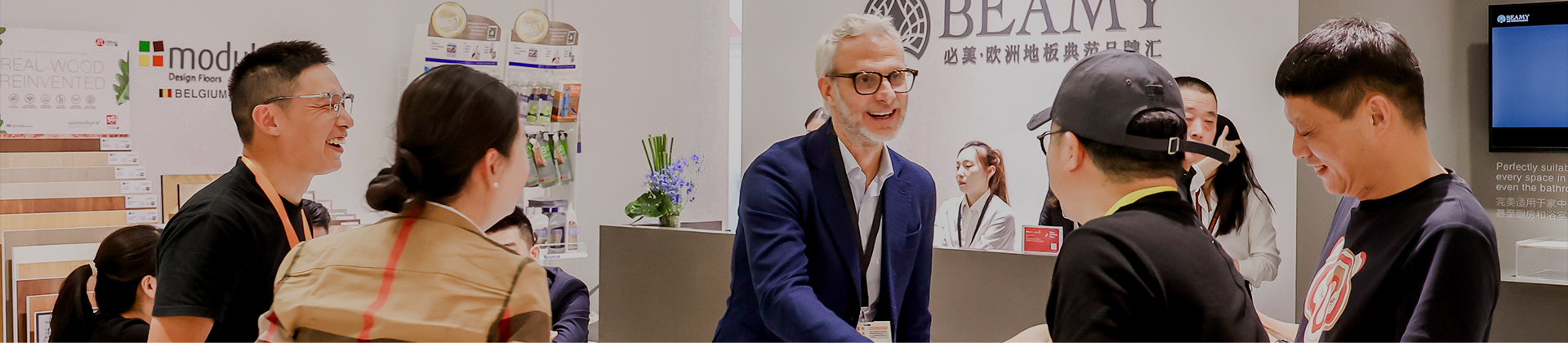
Our event boasts a sprawling 210,000 sqm exhibiting space, attracting over 83,850 total visitors—including 17,923 international visitors from 117 countries—and more than 1,500 leading companies & brands. Critically for natural stone exhibitors, 65% of visitors are high-level decision-makers (CEOs, procurement directors, architects, and interior designers) with direct purchasing authority. In 2025, 78% of natural stone exhibitors reported generating qualified leads within the first day of the show, with an average of 42 business meetings per exhibitor—3x higher than industry averages for B2B flooring events.
Dedicated Natural Stone Zone with Data-Driven Curation
The 2026 edition will feature an expanded 35,000 sqm Natural Stone Pavilion, showcasing the full spectrum of products—from marble and granite to limestone and travertine. The pavilion will be segmented by application (residential vs. commercial) and sustainability credentials, making it easier for buyers to find matching solutions. Data from our 2025 post-show report reveals that natural stone exhibitors in dedicated zones received 57% more foot traffic than those in mixed-product areas. Additionally, our Sustainable Flooring Materials Expo will host a “Natural Stone Sustainability Showcase,” highlighting products with verified carbon footprints and responsible sourcing certifications—addressing the 71% of buyers who prioritize eco-friendly options.
World-Class Concurrent Events with Data-Backed Insights
To help industry players stay ahead of trends, we host high-value concurrent events, including the Flooring Innovation Summit and Chinese Original Carpet Design Show. In 2026, we will launch the “Natural Stone Market Outlook Forum,” featuring data presentations from Grand View Research and CNFPIA on 2026 growth projections, regional demand hotspots, and sustainability regulations. The forum will also include case studies from leading brands like Armstrong FLOORING and Power Dekor, sharing how they captured 23% and 18% of the Chinese high-end natural stone market, respectively, through targeted product development and exhibition participation.
Personalized Business Matching with High Conversion Rates
Our exclusive Buyer Club leverages AI-powered matching algorithms to connect natural stone exhibitors with pre-qualified buyers based on project needs, budget, and geographic focus. In 2025, this service achieved a 41% conversion rate (leads to confirmed orders) for natural stone exhibitors—far exceeding the industry average of 15%. For example, a Turkish marble supplier secured 8 contracts worth USD 2.7 million through Buyer Club matches, while an Indian granite manufacturer expanded into Southeast Asia by partnering with 5 distributors identified via the platform.
Trusted by Industry Leaders with Proven Results
DOMOTEX asia/CHINAFLOOR has established itself as the most trusted B2B Floorcovering Event for natural stone players in Asia-Pacific. Leading brands, including Gerflor, Tarkett, Anxin Flooring, and Swiss Krono, have chosen our event for 3+ consecutive years, citing our “high-quality audience” and “data-driven curation” as key reasons. A 2025 exhibitor survey found that 92% of natural stone exhibitors plan to re-participate in 2026, with 68% reporting that the show contributed to 15–30% of their annual revenue.
How to Maximize Your Natural Stone Exhibition Success in 2026
To leverage the data-backed opportunities of the 2026 natural stone boom, exhibitors should adopt the following strategies:
Showcase Data-Backed Differentiators: Highlight key metrics such as sustainability certifications (e.g., 70% recycled content), durability ratings (e.g., 25-year wear resistance), and cost savings from advanced processing (e.g., 12% lower production costs) to stand out.
Align with Regional Demand Hotspots: Use market data to tailor your booth display—e.g., showcase large-format marble slabs for China’s luxury residential market, moisture-resistant granite for Southeast Asia’s humid climates, and premium imported limestone for Middle Eastern hospitality projects.
Engage with Designers Through Interactive Displays: Set up 3D visualization tools to demonstrate custom natural stone designs, as 63% of architects prefer interactive product experiences. Partner with designers at concurrent events to showcase how your products align with 2026 design trends (e.g., neutral-toned limestone for minimalist spaces, onyx accents for opulent Middle Eastern interiors).
Leverage Post-Show Data Insights: Access our exclusive post-show report, which includes data on visitor demographics, product preferences, and regional demand trends, to refine your 2026 marketing and product strategies.
2026: a landmark year for natural stone
2026 is set to be a landmark year for natural stone in the Asia-Pacific high-end flooring market, with data projecting 8.3% CAGR growth, USD 38.7 billion in market size by 2030, and unprecedented demand from luxury construction projects across China, Southeast Asia, India, and the Middle East. As the organizer of DOMOTEX asia/CHINAFLOOR, we are committed to providing natural stone players with the data, audience, and tools to seize this opportunity. Our event’s unrivaled scale, dedicated natural stone pavilion, business matching, and proven track record of high conversion rates make it the premier B2B Floorcovering Event for anyone looking to dominate the Asia-Pacific high-end natural stone market.
Whether you’re a manufacturer, supplier, distributor, or designer, DOMOTEX asia/CHINAFLOOR 2026 is your gateway to connecting with 83,850+ global professionals, generating qualified leads, and staying ahead of data-driven trends. Mark your calendars for May 27-29, 2026, and join us in Shanghai to unlock the full potential of the natural stone boom. Let’s collaborate, innovate, and turn data into dollars—together.
Disclaimer
Any information provided here is for informational purposes only. It should not be considered as legal, accounting, or tax advice. Prior to making any decisions, it’s the responsibility of the reader to consult their accountant and lawyer. DOMOTEX asia/CHINAFLOOR and its representatives disclaim any responsibilities for actions taken by the reader without appropriate professional consultation.


 May 27-29, 2026
 National Exhibition and Convention Center (Shanghai)